
Box Breathing
A few years ago, I discovered the 4-second box breathing technique while listening to a fascinating meditation podcast. I’ve never been the most patient person when it comes to traditional meditation — sitting still for long stretches can feel impossible — so when I heard about this short, structured breathing exercise, I thought, why not?

I tried it right away, and within just a few minutes, I felt an almost magical shift. My shoulders softened. My mind quietened down. That tight, restless feeling in my chest simply melted away. I don’t practice it every day (though I probably should!), but it’s become one of my most treasured “in-the-moment” tools for calming my nerves, grounding myself, and creating a little pocket of peace when life feels like it’s running too fast.
What is 4-second box breathing?
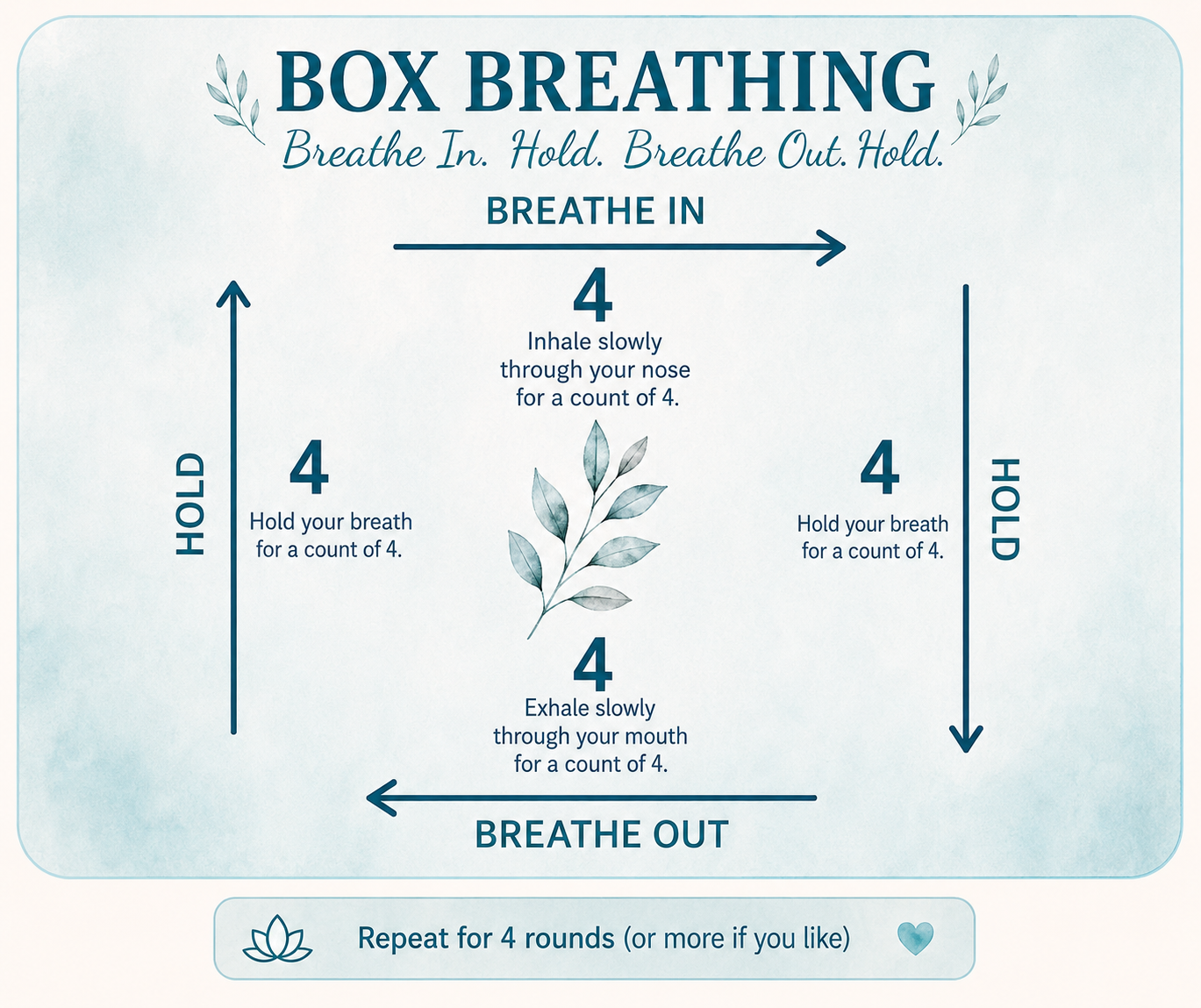
Also known as square breathing or 4-4-4-4 breathing, box breathing is a simple yet powerful technique for calming the mind and body. You count to four for each phase:
Inhale for 4 seconds
Hold your breath for 4 seconds
Exhale for 4 seconds
Hold again for 4 seconds
The beauty of this method is twofold: counting gives your busy mind something to focus on, while the slower breathing pattern encourages slow, steady breathing, which many people find relaxing. Research suggests slow breathing may help activate the body's natural relaxation response.
If counting to four feels uncomfortable, simply shorten or lengthen the count to a pace that feels natural for you. The aim is slow, comfortable breathing—not holding your breath for longer than feels right.
How to Do Box Breathing
You can do box breathing anywhere — at your desk, in bed, on the bus, or even in the middle of a busy day. It’s discreet, requires no equipment, many people find it helpful within just a few rounds of breathing.
Here’s how I do it:
Find a comfortable position. You can sit on the floor or in a chair. Keep your back straight but your shoulders relaxed.
Inhale slowly and deeply through your nose, counting silently to 4.
Hold your breath for a slow count of 4.
Exhale through your mouth for a count of 4.
Hold again for a count of 4 before starting the next round.
I usually repeat this 4–6 times, but even one or two cycles can be enough to shift my mood. I like to imagine drawing a square in my mind as I count — up one side as I inhale, across the top as I hold, down the other side as I exhale, and across the bottom as I hold again.
Why It Works
Box breathing has been used by everyone from meditation practitioners to elite athletes and even the military to stay calm under pressure. Many people practise box breathing because they find it helps them:
Feel calmer during stressful moments
Slow and steady their breathing
Improve focus and concentration
Become more mindful of the present moment
Create a short pause before reacting to stress
For me, it’s like pressing a mental reset button. If I’m overwhelmed, can’t sleep, or feel my thoughts spiralling, this simple 16-second rhythm brings me back to centre.
Note: If you feel dizzy or uncomfortable while practising box breathing, simply return to your normal breathing pattern. If you have a respiratory or heart condition, or any concerns about breathing exercises, speak to a healthcare professional before trying new techniques.
It’s a small thing, but like many of the tools and techniques I share here, its power lies in its simplicity. Try it next time you feel tense, anxious, or just need a moment for yourself — you might be surprised at how much better you feel after only a few breaths.
Disclaimer: This article is for general educational purposes only and is not intended to replace medical advice. Box breathing is a simple relaxation technique and is not a treatment for anxiety or other medical conditions. If you experience persistent anxiety, breathing difficulties, dizziness, or other health concerns, please seek advice from an appropriate healthcare professional.