Teaching Your Child How To Tie Shoelaces
Helping Your Child Master an Important Everyday Skill
Learning to tie shoelaces is a big achievement for many children. It can feel tricky at first, but with patience and regular practice, most children soon gain the confidence to do it by themselves. Once they have mastered this skill, they can put on their shoes independently and feel proud of what they have accomplished.
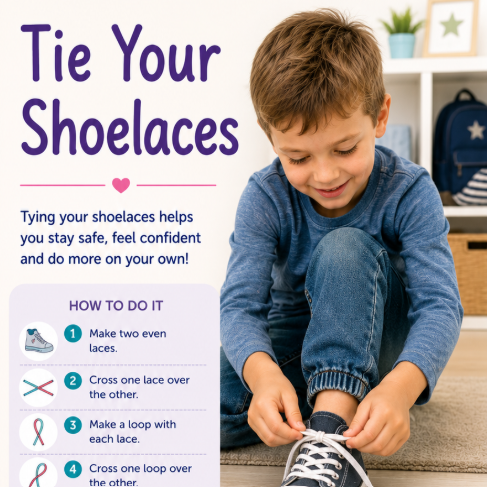
Every child learns at a different pace. Some children are ready at four or five years old, while others may not master shoelaces until they are seven or eight. The important thing is to make learning fun and encourage progress rather than perfection.
Why Learning to Tie Shoelaces Matters
Tying shoelaces is about much more than shoes. It helps children develop:
Fine motor skills
Hand-eye coordination
Finger strength
Concentration
Patience
Confidence
Independence
It also gives children a real sense of achievement when they can say, "I did it myself!"
5 Practical Tips
1. Start When They're Ready
Before introducing shoelaces, make sure your child can confidently use zips, buttons and Velcro fastenings. These skills help prepare their fingers for more detailed movements.
2. Practise When You're Not Rushing
The school morning isn't usually the best time to learn. Choose a relaxed moment at the weekend or after school when there is plenty of time and no pressure.
3. Break It Into Small Steps
Learning one step at a time makes the whole process much less overwhelming. Celebrate each new step before moving on to the next.
4. Use Colourful Laces
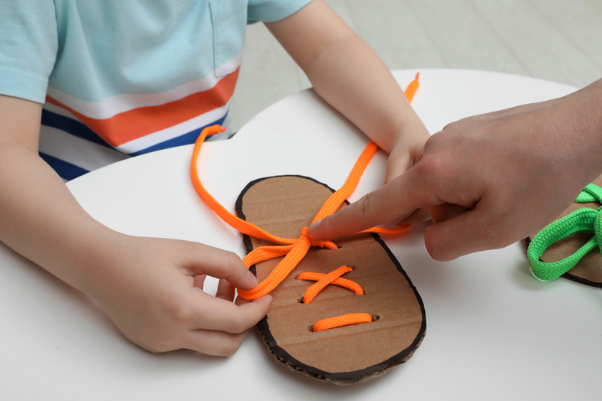
Bright or two-coloured shoelaces can make it easier for children to see which lace they are holding. Some parents also find it helpful to practise on a larger training shoe or a cardboard lacing board.
5. Praise Their Effort
Learning shoelaces takes practice. If the bow comes undone or they need to start again, stay positive. Every attempt helps build confidence and improves coordination.
Make Practice Fun
Children learn best when they're enjoying themselves.
You could:
Practise on an old trainer before trying school shoes.
Turn practice into a short daily game.
Let your child teach a favourite teddy how to tie shoelaces.
Celebrate each small improvement with lots of encouragement.
Just five minutes of practice each day can make a big difference.
Practical Gitti Tip
Resist the temptation to finish the knot for your child. Instead, guide them through the next step and let them complete as much as they can on their own. The confidence they gain from doing it themselves is just as important as learning the skill.
Remember
Every child learns at their own pace. Some will pick up shoelaces quickly, while others simply need a little more time and practice. Keep your encouragement positive, celebrate every success and remember that small daily steps lead to lifelong independence.
Small steps really do lead to big skills.
For more everyday life skills, explore our collection of 30 practical cards available in the Practical Gitti app. They're designed to help children build confidence, independence and important life skills one small step at a time.