7 Smart Kitchen Hacks That Could Save You £50 or More Every Month
The kitchen is often the heart of the home - but it can also be one of the biggest drains on your budget. From wasted food to unnecessary spending, small everyday habits quickly add up. The good news? A few simple changes can save around £50 or more each month without sacrificing flavour, convenience, or healthy eating.
Here are seven practical kitchen hacks you can start using today.
1. Master the “Use-First” Box in Your Fridge
How many times have you bought salad leaves or yogurt, only to discover them moulding away in the back of the fridge a week later? Every item thrown away is money you've already spent.

Expired food in the fridge
How to fix this: Create a simple “Use-First” box - simply use a container or box where you place all items that need to be eaten soon (about to expire, half-used jars, opened packs). Every time someone opens the fridge, it’s the first thing they see.
Savings: Many households throw away food worth £50 or more each month. Even reducing that waste by 20–30% could save around £10–£15.
2. Batch-Cook and Freeze
Spend one afternoon cooking double or triple batches of meals such as chilli, curries, soups, pasta sauces or casseroles. Freeze them in meal-sized portions so you've always got a homemade "ready meal" waiting on busy days.

Batch cooking
Savings: If you swap 2 takeaways a month (£20–25 each) for homemade frozen meals, that’s like £40–50 saved
3. Swap Branded for Store Brands
We all have favourite branded products we love. But many everyday basics like flour, sugar, pasta, tinned tomatoes - taste nearly identical in supermarket “own brand” versions, often 30–50% cheaper.
Try a different approach this month: pick 5 items you regularly buy branded, and swap them for store-brand alternatives. Keep the ones that taste equally as good. E.g. Heinz beans or Lidl’s own beans. Some supermarket own-brand products are surprisingly good. For example, many people happily swap premium baked beans, pasta or tinned tomatoes without noticing much difference.

Swap branded food for store own food
Savings: Swapping just 5–10 items could save £10–15 per shop. Over a month, that’s £30–40
4. Get Creative with Kitchen Scrap Cooking
Those broccoli stems? They’re perfectly edible in stir-fries. Stale bread?
Turn them into breadcrumbs or make croutons. Herb stems? Great for flavouring soups
This isn’t about being fussy - it’s about making the most of what you already bought. Entire meals can be made from what many people throw away.
Vegetable peelings can also be roasted into crispy snacks, and slightly soft fruit works perfectly in smoothies or baking.

Carrots, onions, herbs for making stock
Tip:Keep a freezer bag of veggie off-cuts (carrot ends, onion skins, celery leaves). When it’s full, boil into a homemade stock and it actually tastes really good.
Savings: Reduces waste and stretches meals, easily worth £5–10/month
5. Plan Meals Around What’s On Sale
Impulse shopping is where budgets collapse. Instead of planning meals first, check supermarket offers first, then build your meal plan around discounted proteins and produce.
Example: If chicken thighs are on offer, build several meals around them - such as a chicken curry, traybake, wraps and homemade soup.
Savings: A family can save £10–15 a week just by flexing around offers = £40–60/month
6. Cook the Right Amount Every Time
Most families cook more than they actually need - and leftovers often get scraped into the bin. It really helps to use slightly smaller plates and measure dry ingredients like pasta and rice before cooking.

Use smaller plates
Rule of thumb:
Pasta = 75g dry per adult
Rice = 60g dry per adult
Savings: Cutting overcooked portions by 20% can save £5–10/month in wasted ingredients
7. Ditch Single-Use Kitchen Products
Paper towels, cling film, and disposable wipes add up over the year. Replace them with reusable alternatives:
Microfibre cloths instead of wipes
Beeswax wraps or reusable silicone lids instead of cling film
Reusable bamboo kitchen towels or washable cloths
Not only eco-friendly, but also cheaper long-term.
Savings: At least £5/month
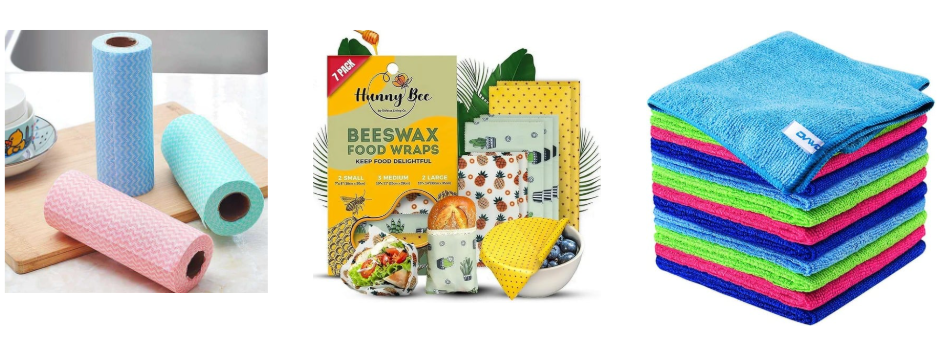
Reusable Kitchen rolls, Beeswax food wraps, micro fibre cloths
Savings
While the individual savings vary from household to household, combining just a few of these habits can realistically save around £50 or more every month. Over a year, that's around £600 or mores - simply by making better use of the food and products you already buy.
🌿PracticalGitti Thoughts
You don't need to change everything overnight. Choose one or two of these kitchen hacks and practise them until they become second nature. Once they're part of your routine, add another.
Small habits really do create big savings - and before long, you'll wonder why you ever did things differently.
Want more practical money-saving ideas? Explore the Practical Gitti Kitchen collection for simple tips that help you waste less, spend less, and make everyday life that little bit easier.