
10 Questions: Why Do I Get Neck Pain & What Can I Do About It?
Many of my clients ask me why they get neck pain and what they can do to ease it. So I’ve put together 10 of the most common questions and answers to help you understand your neck a little better and give you some simple, practical ideas you can try at home.
Although I’m a Dorn Method Practitioner, I’m not a medical professional. The information in this blog is for general guidance only and should not be taken as medical advice.
If you’re experiencing severe, persistent, or worsening neck symptoms, please seek assessment from a qualified healthcare professional before trying any of the suggestions mentioned below.

Neck pain
Q: Why do I wake up with neck pain in the morning?
A: Neck pain on waking is usually linked to sleeping position, pillow height, or an awkward twist of the neck during the night. If your pillow is too high or too flat, your neck muscles work overtime to keep your head supported. Stomach sleeping can force the neck into rotation for hours, creating stiffness.
What can help:
Choose a pillow that keeps your head level with your spine ~ not bending up or down.
Try sleeping on your side or back; both reduce strain.
If you wake up stiff, spend 1–2 minutes doing gentle side-to-side neck movements before getting out of bed.
Warm your neck in the morning (warm shower or heat pack) to ease the stiffness.

Q: Why does sitting at the computer give me neck pain?
A: When we sit for long periods, we naturally drift into a forward head posture, where your head moves even slightly ahead of your shoulders. Each centimetre forward adds significant weight to your cervical spine. Over hours, this strains the muscles, joints, and discs.
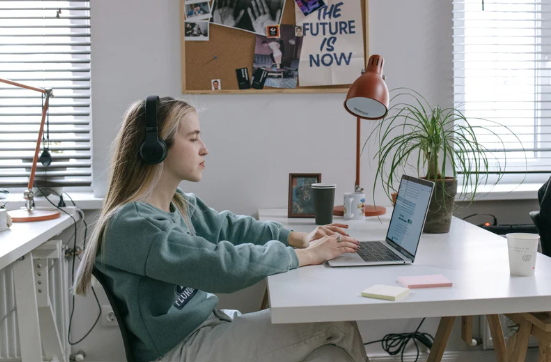
This computer is not at eye level, therefore could cause potential neck issues
What can help:
Raise your laptop or monitor to eye level ~ your gaze should be straight ahead, not down.
Keep your shoulders relaxed and down.
Take micro-breaks every 20–30 minutes: stand up, stretch your chest, and gently roll your shoulders.
Practise a “chin tuck” ~ a tiny movement that brings your head back over your spine, reducing pressure.
Use the Dorn self-help neck alignment movement once or twice a day.
Q: Why does stress make my neck tight?
A: When you’re stressed, your nervous system shifts into fight-or-flight mode, tightening the muscles around your neck, jaw, and shoulders ~ even if you’re not aware of it. Over time, this tension becomes your “default” posture and leads to pain.
What can help:
Slow breathing for 60–90 seconds helps switch off the stress response.
Gentle shoulder circles and neck mobility restore movement.
Stretch your upper traps and chest to release tension.
Try body awareness: notice when your shoulders are creeping upward and let them drop.
Q: Why does my neck hurt when I turn my head?
A: Restricted neck rotation is often caused by tight muscles, stiff facet joints, or asymmetrical posture (e.g., always looking at one side of your monitor). When joints are not moving freely, turning the head can feel pinchy, stiff, or painful.
What can help:
Warm up your neck with gentle mobility: slow side-to-side rotation and chin-to-shoulder movements.
Heat can relax the surrounding muscles.
Dorn Method self-help for the neck helps realign joints and improve movement.
Avoid forcing your neck; gentle, repeated movements work far better than pushing into pain.
Q: Why do I get headaches that start in my neck?
A: These are called tension-type headaches, and they tend to happen when the muscles at the base of your skull become tight and irritated. Poor posture, jaw tension, and long computer hours all contribute.
What can help:
Improve posture — especially keeping your head from drifting forward.
Massage or use your fingers to gently release the tight bands at the base of your skull.
Stretch the tiny suboccipital muscles (I can give you a script if you like).
Make sure your eyes are not straining; adjust lighting or screen brightness.
Q: Why do I get neck pain after carrying bags or shopping?
A: When you carry weight on one side, it pulls your shoulder downward and rotates your spine. Your neck compensates by tilting the opposite way, putting uneven tension on the muscles.
What can help:
Swap sides regularly or carry two small bags instead of one heavy one.
A cross-body bag distributes weight more evenly.
A backpack is the best option when carrying heavier loads.
Strengthen the shoulder stabilisers (serratus anterior, mid and lower traps) to help the body cope with load.
Q: Why do I get neck pain when I’m on my phone?
A: Tech neck happens when the head tilts forward and down. Even a 30-degree tilt can increase the load on your neck up to 20–25kg. Over time, this strains the neck muscles, compresses the discs, and encourages poor posture.

What can help:
Hold your phone at chest or eye height, not on your lap.
Keep your chin gently tucked.
Take regular breaks ~ even 30 seconds helps.
Stretch your chest and strengthen the upper back to undo the effects of looking down.
Q: Why does my neck crack or click ~ and should I worry?
A: Cracking is often harmless. It can come from gas bubbles popping inside joints or from tight ligaments sliding slightly over bone. However, frequent clicking may indicate stiff segments, muscle imbalance, or minor misalignment.
What can help:
Regular mobility exercises keep joints lubricated.
Strengthening the deep neck flexors improves stability.
Dorn self-help can help realign joints and reduce unnecessary clicking.
If clicking is painful or accompanied by weakness/numbness, seek professional assessment.
Q: Why do I feel pain down my shoulder or arm?
A: This often relates to nerve irritation from either tight muscles, compressed joints, or a disc issue. The nerves in your neck travel into your arm ~ when they’re irritated, the pain follows their path.
What can help:
Don’t slump; maintain a relaxed, open chest.
Gentle neck traction stretches can create space around irritated nerves.
Improve shoulder blade stability ~ strong scapular muscles protect the neck.
Use Dorn Method techniques to improve alignment around the cervical spine.
If the pain is severe or constant, get it assessed.
Q: Why does my neck pain keep coming back?
A: Recurring neck pain usually comes from habits ~ sitting the same way, sleeping the same way, carrying stress the same way, or moving with the same imbalances. If the root cause isn’t addressed, the pattern repeats.
What can help:
do a daily 3–5 minute routine for mobility and alignment
check your posture during common activities (desk work, phone use, driving)
strengthen the muscles of the upper back and deep neck flexors
practise Dorn self-help exercises to maintain alignment at home
review your pillow and workstation setup
Your neck improves when your habits support it ~ not just when you stretch it occasionally.