
10 Common Questions About Back Pain ~ And the Answers You’ve Been Looking For
Back pain is one of the most common complaints in modern life. Whether you spend hours at a desk, bend and lift throughout the day, or simply deal with the stress and strain of everyday living, it’s no surprise that the spine occasionally sends out alarm signals.
As a Dorn Method Practitioner and someone who has spoken to countless clients over the years, I can tell you one thing with confidence:
Most back pain doesn’t come from a dramatic injury - it comes from the small things we do every day.
In this blog, I’ll walk you through 10 of the most common questions people ask about back pain, along with simple, practical answers you can start using today. These aren’t complicated medical explanations, but real-world insights that help you understand your body and take back control.
Let’s get started.
Q 1: “Why does my back hurt when I haven’t done anything unusual?”
A: This is perhaps the most common question of all.
Most people expect back pain to come from something dramatic - lifting something heavy, twisting suddenly, or having an accident. But in reality, back pain usually builds up quietly over time. Hours of sitting, small postural habits, tight muscles, weak stabilising muscles, and even stress all add up.
You may not have done anything unusual that day, but your body has been quietly compensating for ages. Back pain is often the final message after weeks, months, or even years of little imbalances.
The good news: gentle daily movement, better posture habits, and simple alignment exercises often reduce this type of pain quickly. This is very the Dorn Self help exercises are so very valuable to know.
Q2: “Is my posture really causing my back pain?”
A: In many cases, yes.
When your posture is out of balance - for example, rounded shoulders, forward head posture, or a tilted pelvis - the muscles and joints have to work much harder to keep you upright. Even small deviations can create significant strain over time.
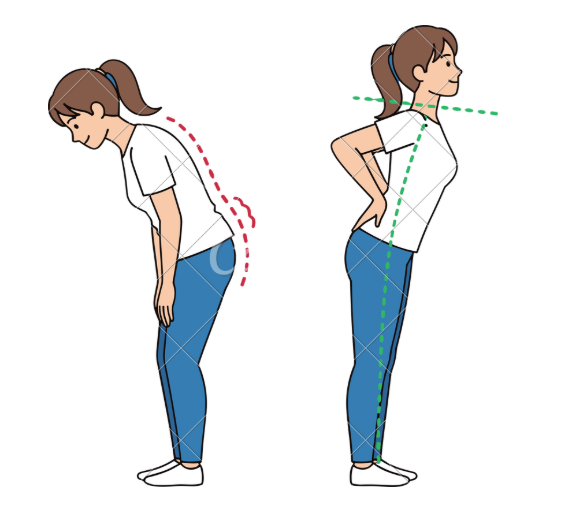
Poor Posture can create back pain issues
Forward head posture alone adds kilograms of extra load on the neck and upper back. The lower back often compensates too, creating tension further down the spine.
Posture isn’t about standing perfectly still - it’s about keeping your body in a position where your muscles don’t have to overwork.
With daily awareness and gentle corrections (and especially with techniques like the Dorn Method), posture can improve at any age.
Q3: “Why is my lower back stiff every morning?”
A: Waking up stiff is incredibly common, especially as we get older or sit a lot during the day.
A few reasons this happens:
While we sleep, the discs in our spine rehydrate. They literally absorb fluid, making them slightly thicker - and our backs a bit stiffer.
Tight hip flexors or hamstrings can pull on the lower back during the night.
Your sleeping position or mattress might not support your natural spinal curves.
Your muscles cool down and tighten when you’re still for many hours.
A gentle morning routine ~ even just 3–5 minutes ~ can ease stiffness quickly. Think light stretching, pelvic tilts, a gentle cat-cow, or one Dorn Method self-help exercise.
Consistency is key.
Q4: “Is sitting really that bad for my back?”
A: Sitting itself isn’t harmful. The problem is sitting too long without movement.
Many of us sit for hours at a time - at work, at meals, on the sofa, in the car. When we stay in one position for too long:
The hip flexors tighten.
The glutes become less active.
The spine compresses.
The shoulders roll forward.
The head drifts forward.
The core switches off.
No wonder we start to feel uncomfortable or stiff.
A better goal is not “sit less” but move more often. Even standing up for 30 seconds every half hour resets the body. Gentle twists, shoulder rolls, or a few steps around the room can be enough to prevent tension from building up.

Q5: “Do I need a stronger core to fix my back pain?”
A: A stronger core certainly helps - but strength alone isn’t a complete solution.
Your spine relies on a combination of:
strength
flexibility
mobility
proper breathing
balanced posture
Many athletes with extremely strong cores still suffer from back pain because their posture isn’t aligned or their muscles are overworking in the wrong places.
Instead of focusing on “core strength,” think about core function. Can your core support your spine when you move? Are you breathing correctly? Is your posture balanced? Are your joints moving well?
Gentle strengthening exercises, combined with mobility and alignment techniques, make the biggest difference.
Q6: “Why does my back crack when I move?”
A: Those little pops and cracks - especially in the morning or after sitting for a long time - are usually nothing to worry about.
The sound comes from tiny pressure changes in your joints, like small gas bubbles moving around. It’s called cavitation and is completely normal.
What isn’t normal is:
cracking accompanied by pain
joints that feel “stuck” or lock repeatedly
sharp pain with movement
These may indicate stiffness, imbalance, or inflammation. Gentle mobilisation, daily movement, and alignment work often help reduce unwanted joint noises.

Kind of bubbles
Q7: “Should I rest when my back hurts?”
A: This is a tricky one, because rest can feel instinctively like the safest option.
A short period of rest is fine - especially after a sudden flare or strain - but too much rest can actually make the problem worse. Muscles stiffen, circulation decreases, and the nervous system becomes more sensitive.
Most types of back pain improve faster with gentle, consistent movement such as:
walking
light stretching
mobility exercises
Dorn self-help techniques (which use movement and alignment together)
Think “keep moving ~ but gently.”
Q8: “Can stress really cause back pain?”
A: Absolutely. Many people underestimate the mind-body connection.
When we are stressed or anxious, the body reacts physically:
breathing becomes shallow
shoulders lift and tighten
the jaw and neck tense
the nervous system enters a ‘protective’ mode
muscles contract without us realising
Over time, this creates tension in the back, neck, hips, and shoulders. Chronic stress can even increase our sensitivity to pain.
Simple grounding practices, deep breathing, and gentle stretching can help reset the body. Again techniques like the Dorn also help calm the nervous system by encouraging smooth, flowing movement.
Q9: “Do I need an X-ray or MRI?”
A: Most everyday back pain doesn’t require any scans at all.
The majority of back pain is mechanical - meaning it comes from muscles, joints, posture, or alignment - and improves with self-care, movement, and time.
Imaging is typically recommended only when:
pain lasts for many weeks without improvement
there has been significant trauma
symptoms include tingling, numbness, or weakness in the legs
there is concern about a more serious underlying condition
For most people, understanding their habits and improving alignment is far more helpful than a scan. I can definitely vouch for that. Having suffered with my own neck pain for many, many years now, in fact since my early 20s, it was the Dorn Method Alignment that finally helped me out of this ‘often unbearable pain’.
Q10: “What can I do today to feel better?”
A: If you’re dealing with back pain right now, here are three simple steps that can change how you feel today - and tomorrow.
1. Move gently
A slow walk, a few mobility exercises, or even light household tasks help stimulate circulation and ease stiffness.
2. Reset your posture throughout the day
Small reminders help: shoulders soft, head balanced, pelvis neutral, weight evenly on both feet or sit bones.
3. Do one alignment exercise
This could be:
a Dorn Method pelvic balancing exercise
gentle spinal mobilisation
a stretch you know your body responds well to
Small, consistent habits work far better than occasional big efforts.
Final Thoughts
Back pain can feel overwhelming, frustrating, and limiting - but it’s also one of the most treatable and manageable issues when approached with gentle, consistent care.
Most people don’t need complicated routines or intense workouts. What they need is awareness, alignment, movement, and a few simple tools they can use daily.
Small Steps ~ Simple Habits ~ Big Changes